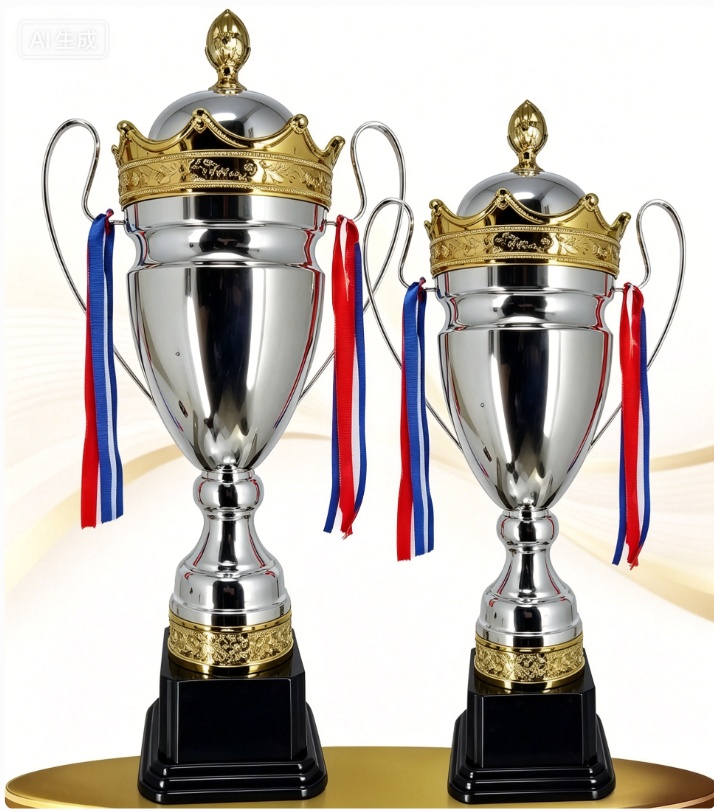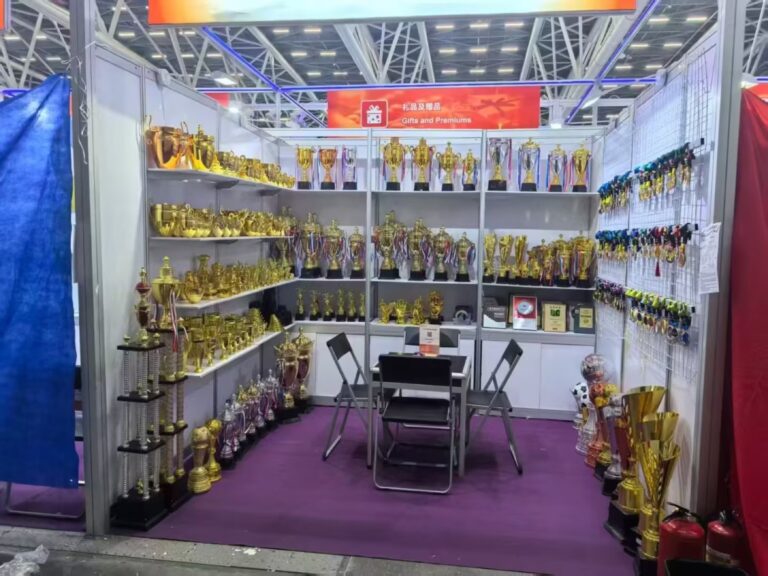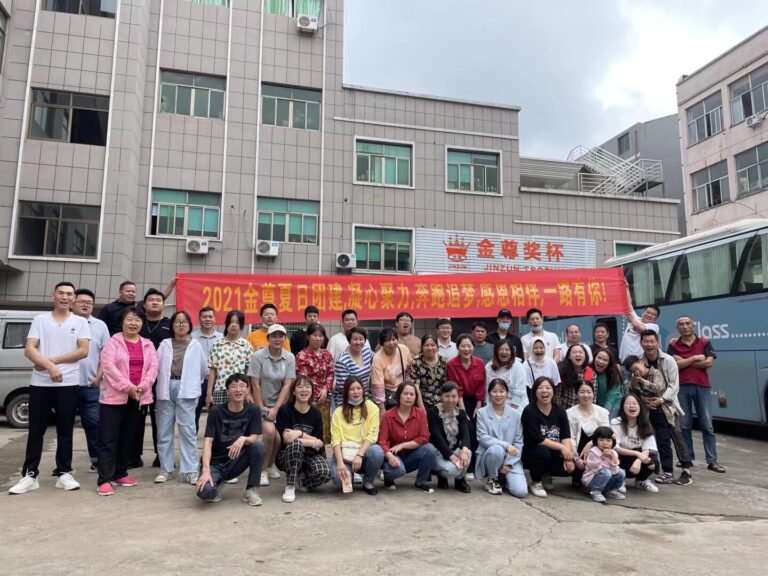
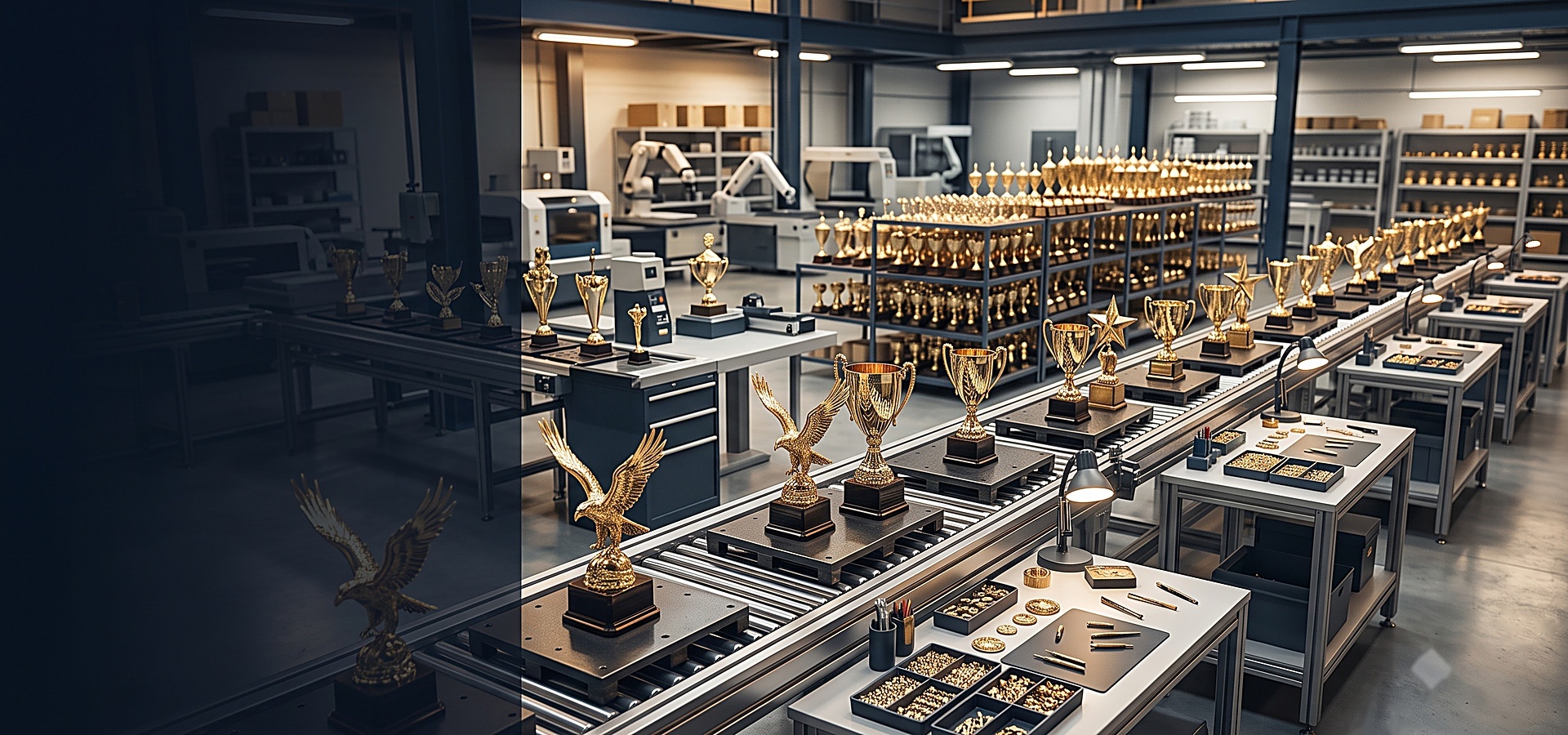
Trophies are made through a seven-step manufacturing process: design review, mold development, forming, surface finishing, decoration, assembly, and quality control. In a real trophy factory, every step is controlled in-house so that a 5,000-piece order matches the approved sample piece for piece.
This guide explains how trophies are made — from the first sketch to the packed carton — and what buyers should verify at each stage when choosing a trophy manufacturer.
Step 1: Design and Artwork Review
Every trophy starts with an idea: a logo, a sketch, a photo of a trophy you want replicated, or a new concept for your market. At JinZun Trophy, our design and mold-engineering team reviews the artwork for manufacturability before anything is cut.
- Size and proportion — figure height, base size, and overall balance.
- Detail depth — how deep relief lines and logos can be cast or engraved.
- Text legibility — small letters and script fonts that will be hard to read after plating.
- Cost structure — material, mold, plating, and packaging recommendations that fit your target price.
This is the cheapest stage to make changes. A professional factory gives you a digital proof or 3D preview here, not after production starts.
Step 2: Mold and Tooling Development
For metal and resin trophies, the mold is the heart of the product. Our tooling engineers use CNC engraving to cut steel molds with precise cavity detail.
- Metal trophies — zinc alloy die-casting molds; the most common method for detailed, plated trophies.
- Resin trophies — silicone or metal molds for painted figures and complex sport shapes.
- Crystal and glass — no mold in the traditional sense; blocks are cut, sandblasted, and polished.
- Wood and acrylic — CNC routing and laser cutting replace molds entirely.
Mold accuracy directly controls detail sharpness, surface smoothness, and consistency across large runs. This is why “does the factory own its molds?” is one of the first questions serious buyers ask.
Step 3: Forming — Casting, Injection, or Cutting
With tooling ready, the trophy takes its basic shape:
| Process | Material | Why It’s Used |
|---|---|---|
| Die casting | Zinc alloy, aluminum | Complex 3D detail, smooth finish after plating |
| Injection molding | Plastic, ABS | Low-cost, repeatable, good for participation awards |
| Resin casting | Polyresin | Highly sculpted figures, painted detail |
| CNC / laser cutting | Crystal, acrylic, wood | Precise flat and 3D shapes without molds |
Our production lines run die-casting, injection, CNC, and laser stations in-house, which is what makes mixed-material programs (metal figure + crystal base + wood plaque) possible under one roof.
Step 4: Surface Finishing — Polishing and Plating
Raw metal looks nothing like a finished trophy. Surface finishing creates the shine, color, and protection:
- Polishing and buffing — removes cast lines and prepares the surface.
- Electroplating — gold, silver, nickel, bronze, or antique finishes in matte, mirror, or brushed textures.
- Painting and powder coating — for colored resin, plastic, and metal parts.
- Sandblasting — frosted backgrounds on crystal and glass.
A well-controlled plating line is the difference between a premium trophy and a cheap one. Ask your supplier which finishes they run in-house and how they prevent oxidation over time.
Step 5: Decoration — Engraving, Printing, and Color Filling
Decoration is where your brand appears:
- Laser and CNC engraving — logos, names, dates, and long award text.
- Silk-screen and pad printing — color logos on metal, crystal, and plastic.
- Enamel color filling — for badges, pins, and medal details.
- Custom plates — engraved brass, aluminum, or silver plates for perpetual trophies.
Spelling errors are the most common award mistake. Reputable factories always return a digital proof of engraving text before production and re-check the plate text on the final product.
Step 6: Assembly
Trophies are assembled with the same care as the components:
- Figures joined to bases with reinforced metal studs — not glue-only joints that break in transit.
- Base weight and balance checked so tall trophies stand straight.
- Ribbons, lanyards, boxes, and presentation cases added for medals and awards.
- Packaging designed for international shipping: foam, corner protectors, and export cartons.
Step 7: Quality Control and Shipping
The final stage decides whether the product you receive matches the sample you approved. A reliable trophy factory checks:
- Surface finish and plating consistency
- Logo position, engraving depth, and text accuracy
- Assembly strength and base stability
- Ribbon and packaging completeness
- Pre-shipment photos or video for the buyer’s confirmation
Then the order ships by express (DHL, FedEx, UPS), air freight, or sea freight — whichever protects your event date. At JinZun Trophy, export packing and documentation are handled by our own team in Yiwu, with access to the world’s largest sourcing market and its logistics network.
How Long Does Trophy Manufacturing Take?
| Stage | Typical Time |
|---|---|
| Artwork review and digital proof | 1-3 days |
| Sample (standard custom design) | 5-7 days |
| New mold development | 10-20 days |
| Mass production | 10-15 days after confirmation |
| Shipping to North America / Europe | 3-7 days express, 20-35 days sea |
What to Look For in a Trophy Factory
Before choosing a manufacturer, verify that they own their production line, show real workshop photos, provide a digital proof before production, inspect every carton, and communicate in one clear contact from quotation to delivery. Read our full checklist here: How to Choose a Trophy Manufacturer for Your Wholesale Business.
You can also tour our own facilities on the Our Factory page — assembly lines, plating, warehouse, and export packing.
Frequently Asked Questions About Trophy Manufacturing
How are metal trophies made?
Metal trophies are usually zinc-alloy die-cast into a steel mold, then polished, electroplated (gold, silver, nickel, or antique), decorated by engraving or printing, and assembled onto a base. The mold is made by CNC engraving.
How are crystal trophies made?
Crystal awards start as optical crystal (often K9) blocks, which are cut or shaped, sandblasted or laser-engraved with the design, polished, and bonded to a base. No molds are needed, so low quantities are practical.
Can a factory replicate a trophy design from a photo?
Yes. Send a clear photo with dimensions and material preferences, and the design team will rebuild the artwork for manufacturing, confirm the mold cost and sample timeline, and produce a sample for approval before bulk production.
What is the difference between OEM and ODM?
OEM means your logo and packaging applied to existing products or molds; ODM means the factory develops a new product for you from your concept, sketch, or reference. Both are supported. See OEM/ODM Custom Trophies: From Artwork to Delivery.
Do you share production photos before shipping?
Yes. Before dispatch we share pre-shipment photos — and for larger orders, videos of packing — so you can confirm the finished goods match the approved sample.
What is your factory’s monthly capacity?
Our Yiwu factory operates 20 production lines with a team of 50+ staff across die-casting, plating, engraving, assembly, QC, and packing. Monthly output adapts to seasonal event peaks; we reserve production slots for confirmed orders so your event date is protected.
See the Trophy Factory Process Yourself
The fastest way to judge a factory is to see it working. Watch our real workshop videos, or better — send us your design and request a sample. You will see the same process described above applied to your own trophy.
Chat with us on WhatsApp (+86 182 5899 2555) · susan@jzstationery.com